

Key Takeaways
- An inside-out lens can cause grittiness, blurry vision, and lens movement throughout the day.
- The cup shape check and taco test are two quick ways to confirm proper orientation before insertion.
- Laser markings and tinted edges on some lenses can also help you spot a flipped lens.
- Persistent discomfort after correcting a flipped lens is worth a visit to your eye doctor.
You pop your contact lens in, blink a few times, and something just feels wrong. The lens seems to move around, your vision looks a little off, and no amount of blinking makes it better. Before you assume something is wrong with your eye, the lens itself might just be inside out. Doctors EyeCare Grande Prairie gets questions like this often, and it’s one of the most common contact lens mix-ups there is.
An inside-out contact lens doesn’t sit flush against your eye’s surface, which can compromise comfort and vision even when your prescription is correct. The good news is that flipping a lens takes seconds, and a few simple checks before insertion can save you a lot of frustration throughout the day. If you’re still getting used to lenses, reviewing proper contact lens hygiene basics can also make the whole process smoother.
Signs Your Contact Lens Might Be Inside Out
What You Might Feel
One of the first things you might notice is a gritty or dry sensation that lingers no matter how much you blink. It can feel a lot like something is stuck in your eye, even though nothing is actually there (other than the contact). That scratchy feeling comes from the lens edge not sitting properly against your eye.
You might also notice the lens shifting around when you blink, almost like it can’t find a stable position. A lens that pops out more easily than usual is another sign that something is off. These little annoyances are your eye’s way of telling you the lens orientation needs a second look.
What You Might Notice with Your Vision
Even if your prescription is up to date, an inside-out lens can make your vision look blurry or inconsistent. You might notice a cloudy quality to your sight that doesn’t clear up when you blink. If things look sharper after you remove the lens, orientation is likely the issue, not your prescription.

Easy Ways to Check Lens Orientation
The Cup Shape Check
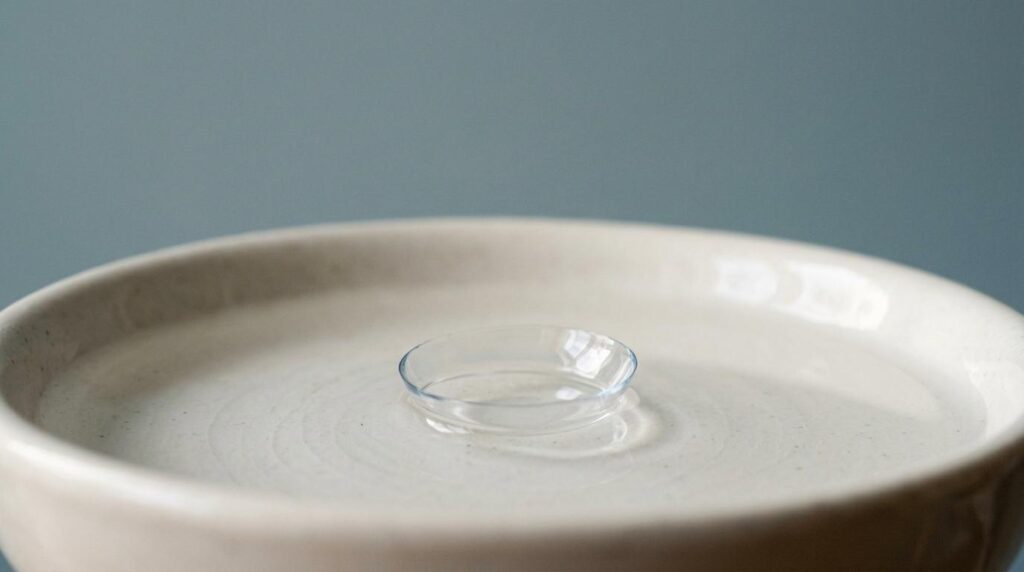
Place the lens on the tip of your finger and hold it up to the light. A correctly oriented lens forms a smooth, round cup shape with edges that point straight up. If the edges flare outward like the rim of a bowl, the lens is inside out. This is one of the fastest checks you can do.
The Taco Test
Gently pinch the lens between your thumb and forefinger, just enough to fold it slightly. When the lens is correctly oriented, the edges curve inward toward each other, almost like a soft taco shell. If the edges bend outward or flatten like a spoon, flip the lens over before putting it in.
Laser Markings and Tinted Edges
Many contact lenses have tiny laser-etched numbers or letters along the edge. If those markings look backward or reversed, the lens may be flipped. Some lenses also have a light blue tint along the rim to make them easier to handle. A faded or barely visible tint usually means the lens is inside out. The type of contact lens you wear can also affect how easy it is to spot these orientation cues, since different materials and designs vary quite a bit.
How to Remove and Reinsert a Flipped Lens
Safe Removal Steps
- Wash your hands thoroughly before touching your eye or lens.
- Use rewetting drops to loosen the lens if it feels stuck or uncomfortable.
- Gently slide the lens to the white of your eye, then carefully pinch it out with your fingertips.
Starting Fresh
Once the lens is out, check its orientation before putting it back in using any of the methods above. If you wear daily lenses, keep in mind that they come correctly oriented right out of the packaging, so a quick check at the start is all you need. Building this habit into your routine makes insertion faster and more comfortable every time. For a full walkthrough, these step-by-step instructions for removing contact lenses can help you feel more confident with the process.
When to Visit Your Eye Doctor in Grande Prairie
Sometimes discomfort sticks around even after you flip the lens back to the correct orientation. If that happens, it may point to something beyond a simple orientation issue, like dryness, irritation, or a lens that no longer fits your eye properly. A visit to your eye doctor can help figure out what’s going on.
If you regularly struggle to handle or insert your lenses, that’s also worth bringing up. Contact lens wear should feel manageable, not like a daily battle. Doctors EyeCare Grande Prairie can help with contact lens fittings, updated prescriptions, and any questions you have about your lenses. Reach out to our team to book your appointment.